About Us

The Center for Political Studies, University of Indonesia (PUSKAPOL UI) is a research institution engaged in research, advocacy, consultancy, publication, and community service. Established in 1993, PUSKAPOL UI (formerly known as the Political Science Laboratory) was formed by the Department of Political Science, Faculty of Social and Political Sciences (FISIP) UI, as an effort to respond to socio-political developments in Indonesia and the need for alternative solutions based on rigorous studies and research. As a campus-based research institution, PUSKAPOL UI strives to produce knowledge grounded in scientific principles for the public good, with its research findings aimed at identifying and developing various alternative solutions to existing social and political issues.

To date, PUSKAPOL UI continues to contribute to efforts to improve good political governance, particularly on issues such as electoral and party system reform, political representation, human rights, and support for marginalized groups. PUSKAPOL UI is also recognized as a campus-based research institution dedicated to issues and advocacy for marginalized groups, such as women in the formal political arena, and actively conducts various forms of studies and advocacy related to promoting more democratic political governance. PUSKAPOL UI’s approach involves providing support in the form of research findings, knowledge production, and alternative solutions for advocacy and empowerment efforts undertaken by civil society organizations to improve good and more democratic political governance.
Download PUSKAPOL UI Profile

Download Profile

The development of democracy in Indonesia since 1999 has spurred a high level of interest and research in political science. Research issues that were sensitive and difficult to pursue during the New Order era emerged as focal points in the reform era. Among the most prominent were electoral reform, political parties, legislative bodies, and social/civil society movements.

When the People’s Consultative Assembly (MPR) amended the 1945 Constitution from 1999 to 2002, a surge of research and academic works emerged, discussing the constitution, the separation of powers among state institutions, political parties, local politics, and political participation. Essentially, the realm of political science advanced in line with policymakers’ needs to reposition the roles and functions of political institutions, including the procedural mechanisms of democracy.

The Center for Political Studies (previously known as the Political Science Laboratory), as a research institution under the coordination of the Department of Political Science, FISIP, University of Indonesia, was undeniably involved in this major current. In addition to individual UI political science lecturers playing a role in political transformation, the institution was also expected to produce studies that could serve as references for improving political institutions/systems. PUSKAPOL UI (or the Political Lab 1999-2000) participated in the early phase of reform by holding a national seminar on the Amendment of the 1945 Constitution, which discussed several topics such as legislative strengthening, presidential power, inter-institutional control mechanisms, and human rights. The seminar garnered public attention; firstly, because it originated from a university environment, and secondly, due to the momentum of policymakers needing to respond to various demands for political reform. This marked the moment for the Political Lab (now PUSKAPOL UI) to enter a phase of vertical relations with decision-makers and horizontal relations with civil society organizations within the pro-democracy network.

Since its establishment in 1994, PUSKAPOL UI has undergone three phases of development:

1994 – 2000

In its early years, PUSKAPOL UI (Political Lab) focused on institutional introduction and internal consolidation, alongside the growth of research/study centers within the University of Indonesia.

2001 – 2005

Entering its second five-year period, marked by the name change from Political Lab to PUSKAPOL UI as per university policy, PUSKAPOL UI experienced fluctuations in line with the dynamics within the Department of Political Science, its parent department. During this period, PUSKAPOL UI’s activities were dedicated to organizational consolidation, personnel mapping, and designing strategic issues for its research agenda.

2006 – 2012

The subsequent period marked the most crucial phase in PUSKAPOL UI’s ten-year existence, with opportunities for strengthening institutional capacity, personnel, and strategic research. PUSKAPOL UI successfully designed two strategic research clusters: Political Representation and Political Decentralization, which became PUSKAPOL UI’s trademark for the next decade.

To produce reputable political studies in Southeast Asia.

To actively encourage scientific debate, raise public awareness, and promote alternative policy solutions related to social and political issues.

To develop partnerships with academic communities, practitioners, and policymakers in resolving social and political problems.

Democracy

The Democracy Research Cluster conducts socio-political research related to contemporary issues in democracy, primarily focusing on civil space and democratic resilience. Research in this topic offers new knowledge that bridges academic research and critical analytical approaches to address issues of human rights, civil liberties, and democracy. Some studies that have been and are being conducted include populism and challenges to democracy in Indonesia, identity politics in the 2019 elections, the shrinking democratic space in Indonesia, the politics of religious CSOs’ policies related to religious freedom, the space for religious freedom of minority groups in Indonesia, social analysis of civil society in eastern Indonesia, and the civil space ecosystem and civil society vulnerability.

Social and Political Inclusion

The Social and Political Inclusion Research Cluster is a collaborative research group under PUSKAPOL UI focused on promoting equal participation of citizens in social and political life. Using an intersectional approach, this research cluster targets inequalities and discrimination often experienced by various vulnerable groups, including women, people with disabilities, and youth. The research takes two forms: pure research to advance scientific knowledge and applied research to promote evidence-based policy changes. Some of the research conducted includes Affirmative Funding for Women Politicians’ Education, The Role of Gender in Corrupt and Anti-Corruption Behavior in Legislative Bodies and Election Management Bodies in Indonesia, Promoting Affirmative Action for Women’s Representation in Election Management Bodies: Experiences from She Leads Indonesia 2021 Advocacy, Violence Against Women in Elections and Its Impact on Women’s Representation, Thematic Profile of Political Participation of Millennial and Gen Z Women in the 2024 Elections, and other research.

Environment and Energy

The Environment and Energy Research Cluster conducts socio-political research related to environmental sustainability and energy transition. Focusing on climate change, energy transition, and environmental sustainability, this cluster promotes increased socio-political research on efforts to reduce greenhouse gas emissions and preserve natural resources. This cluster is interdisciplinary to ensure comprehensive solutions, especially for policymakers, to complex problems and to promote effective environmental and energy policies. Overall, this cluster is crucial for fostering a balanced and sustainable relationship between human activities and the environment. Thus, this cluster plays a role not only in addressing urgent environmental problems but also in creating a greener and more sustainable future. This cluster addresses several environmental issues, namely Climate Change, Energy Transition, and Environmental Sustainability.

Executive Director

Hurriyah

Director of PUSKAPOL UI and senior academic; expert in policy research, democracy, and women's politics.

Hurriyah is a senior lecturer in the Department of Political Science and the Executive Director of the Center for Political Studies (PUSKAPOL) at the University of Indonesia. She has conducted research and published on religion and politics, human rights and religious freedom, and democratization studies. She is also involved in several initiatives to mainstream freedom of religion or belief, as well as initiatives to strengthen women’s political representation in Indonesia. She has over 15 years of experience in academic and applied research, assisting governments, international organizations, and local organizations on strategies to promote research-based advocacy for policy change in Indonesia.

Research Interests:

  • Religion and Politics
  • Women and Politics
  • Human Rights and Diversity
  • Democratization Studies
Researcher

Delia Wildianti

Researcher and Coordinator of the Social and Political Inclusion Cluster; UI Political Science Master's Alumna; Expert on election issues, democracy, and women's politics.

Delia Wildianti was born in Garut, West Java, on May 7, 1993. She completed her undergraduate studies in Political Science at FISIP UI in 2015 and her master’s degree in Political Science at FISIP UI in 2022. Her study interests include women’s representation, elections, democracy, political parties, and social movements.

Currently, Delia actively serves as a researcher at PUSKAPOL UI, engaging in various research, advocacy, training, publication, and community service activities. Delia has a particular interest in promoting inclusive and participatory democratic processes, both in the context of procedural and substantive democracy.

Since 2022, Delia has also actively taught in the Undergraduate Political Science Program at FISIP UI for several courses such as Introduction to Political Science, Introduction to Qualitative Basic Research, Introduction to Social Methods, Indonesian Political System, and Indonesian Political Thought.

Research Interests:

  • Democracy
  • Elections
  • Women’s Political Representation
  • Social Movements
Research Assistant

Revo Linggar Vandito

A political science student who thrives at the intersection of research, communication, and youth advocacy.

Research Assistant

Velma Anindya Hapsari

Research Assistant

Gregory Darren Loandouw

Political Science student at Universitas Indonesia; focused on politics, religion, human rights, and democracy. Research Assistant at PUSKAPOL UI.

Gregory Darren Loandouw is an undergraduate student in the Political Science program at the Faculty of Social and Political Sciences, Universitas Indonesia. He has a strong interest in political studies, particularly those related to religion and politics, identity politics, human rights, political thought, and democracy.

Currently, Darren serves as a Research Assistant at PUSKAPOL UI. In this role, he is involved in supporting research activities and contributing to the development of studies focused on contemporary political issues. With his academic background in political science and organizational experience, Darren contributes to strengthening research and advancing knowledge within PUSKAPOL UI.

Media & Communications Staff

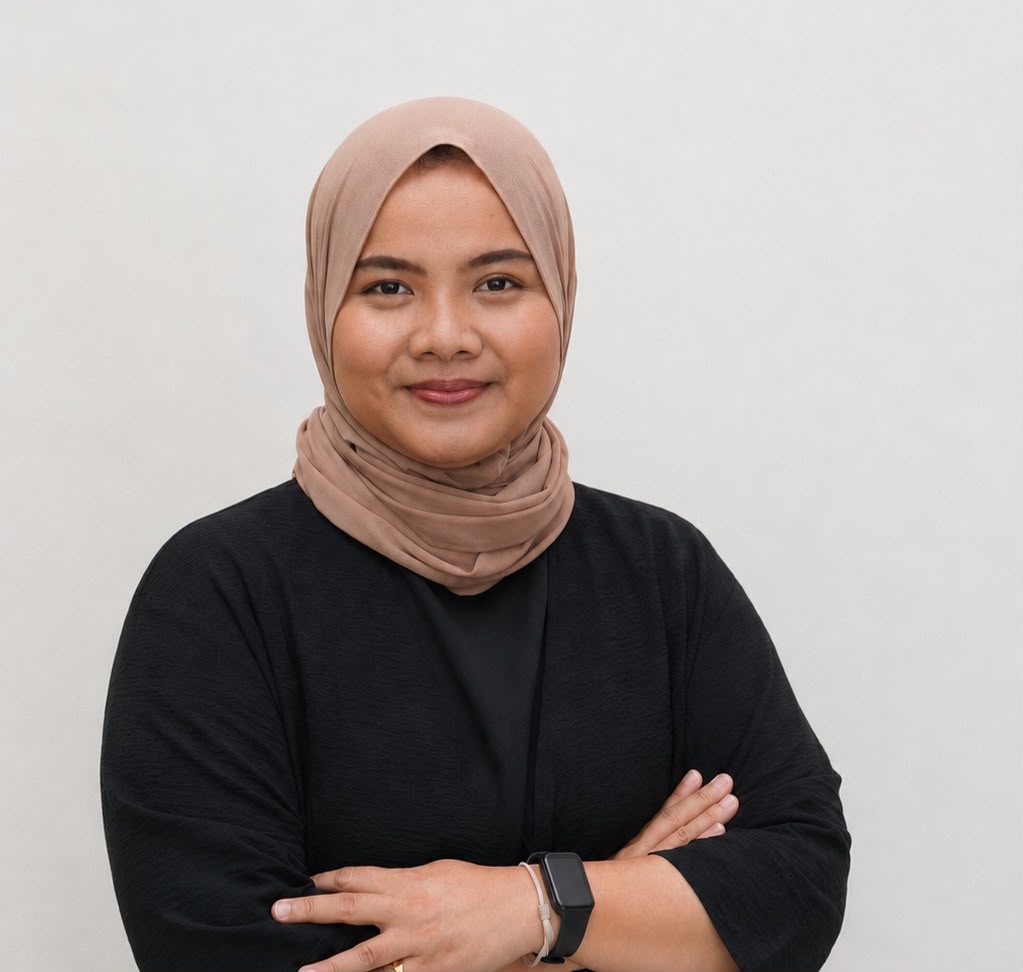
Rafidah Isma

Media Staff at PUSKAPOL UI; focused on digital media and public communication. Manages content and digital strategy.

Rafidah Isma Marhamah is a graduate of Islamic Broadcasting Communication from Universitas Muhammadiyah Jakarta. She has a strong interest in digital media and public communication, particularly in managing and packaging information into content that is communicative, relevant, and easy to understand.

Currently, Rafidah serves as Media and Communications Staff at PUSKAPOL UI. In this role, she manages the institution’s social media, develops digital communication strategies, and produces and publishes various content such as articles, posters, videos, and infographics related to political issues and activities. She is also involved in content distribution across digital platforms and documentation of institutional activities. With a creative and structured approach, Rafidah supports broader information dissemination and strengthens public communication.

Admin and Finance Staff

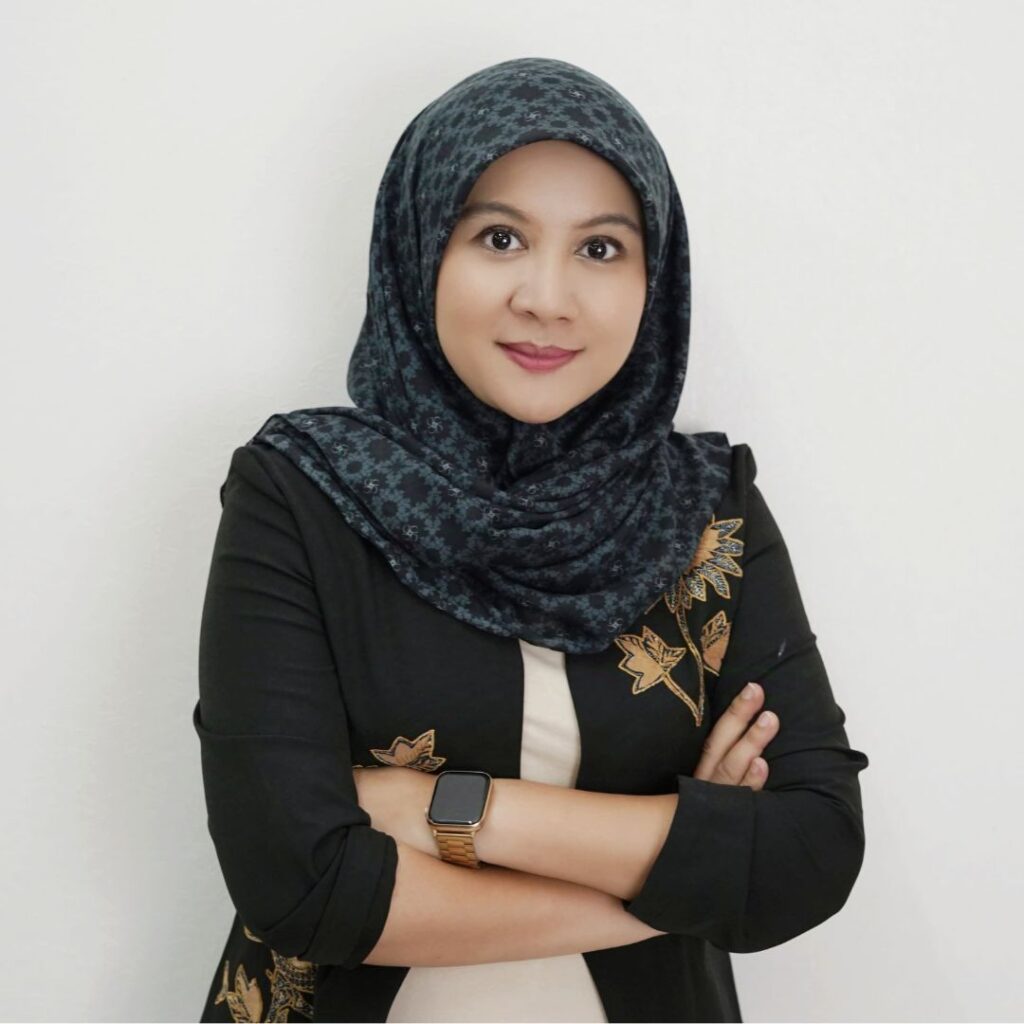
Reza Nurul Fauziah

PUSKAPOL UI Admin and Finance Staff; Expert in document management, financial verification, and accurate archiving.

Reza Nurul Fauziah is the administrative and finance staff at PUSKAPOL UI. She holds a bachelor’s degree in English Literature from Gunadarma University and has experience as an administrative staff at PT Dyas Marto Perkasa and a content writer at PT Dyas Bhagya Sejahtera.

As administrative and finance staff, Reza is responsible for accurately recording PUSKAPOL UI’s income and expenses, and regularly archiving all incoming and outgoing documents. She manages payment requests, processes payments for PUSKAPOL UI’s needs, and reviews and verifies financial documents.

Interested in Collaborating?

We welcome the opportunity to collaborate with academic institutions, government agencies, NGOs, and private sector organizations on research.